Masgonzola is Italy’s creamiest blue cheese fusion — and it might just convert every blue cheese skeptic. Discover flavor, recipes, and perfect pairings.
If you’ve ever stood in front of a cheese counter, reached for a wedge of blue cheese, and then quietly put it back because the smell alone knocked you sideways — you are not alone. Blue cheese has a reputation. It’s bold, sharp, assertive, and not always easy to love on first encounter. But here’s the thing: the world of Italian blue cheese is far more nuanced than that one pungent memory suggests, and Masgonzola is living proof of it.
Masgonzola is a beautifully crafted fusion cheese that brings together the silky richness of mascarpone and the iconic, mold-veined character of Gorgonzola Dolce. The result? A cheese that is simultaneously indulgent and approachable — one that invites you into the world of blue cheese without throwing you off the deep end. Whether you’re a lifelong cheese enthusiast or someone just beginning to explore beyond cheddar and brie, Masgonzola deserves a place on your radar and, more importantly, on your cheese board.
In this comprehensive guide, we’ll walk through everything worth knowing about Masgonzola — its origins, its flavor profile, how it’s made, how to cook with it, and why it represents one of the most exciting developments in the tradition of Italian blue cheese.
What Exactly Is Masgonzola?
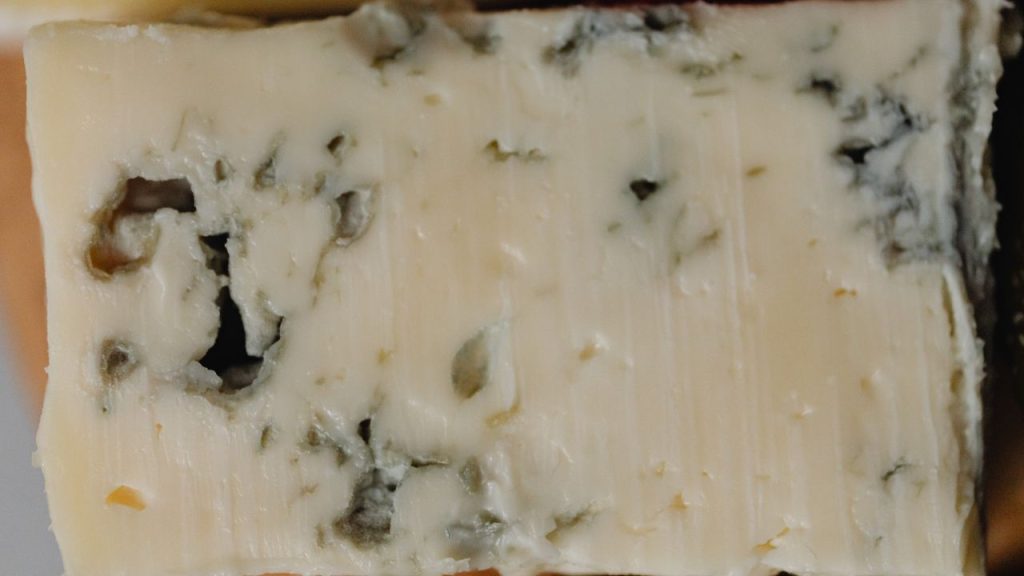
Masgonzola is a fusion of two Italian cheeses: mascarpone and Gorgonzola Dolce. These two cheeses are folded together with care, creating a product that carries the visual signature of blue cheese — those distinct, beautiful veins running through a pale, creamy body — but with a flavor and texture that is far gentler and more luscious than traditional blue cheese alone.
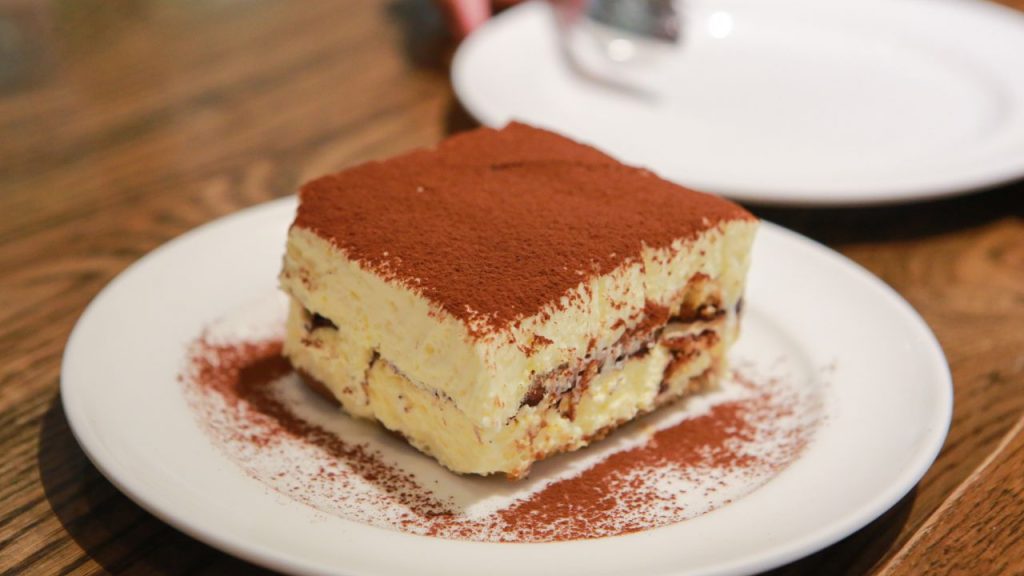
Mascarpone, for those unfamiliar, is an Italian cream cheese with an almost buttery texture and a mild, slightly sweet flavor. It’s the cheese behind tiramisu, behind countless creamy pasta sauces, and behind some of the most decadent desserts Italy has ever produced. On its own, it’s rich but neutral.
Gorgonzola Dolce, on the other hand, is one of Italy’s most celebrated cheeses — a soft, young blue cheese with a sweet, milky character and just enough tangy bite to remind you what you’re eating.
When you combine the two, something magical happens. The mascarpone wraps around the Gorgonzola like a warm embrace, softening the sharpness, adding layers of creaminess, and producing a cheese that is deeply satisfying without ever being aggressive. That balance is what makes Masgonzola so compelling in the world of Italian blue cheese.
The Italian Blue Cheese Tradition Behind Masgonzola
To truly appreciate Masgonzola, it helps to understand where it comes from — and that means spending some time with Gorgonzola itself.
Gorgonzola: Italy’s Crown Jewel of Blue Cheese
It is oldest blue cheeses in the world. Its origins trace back to the northern Italian regions of Lombardy and Piedmont, with some historical accounts suggesting production as far back as the 9th century. The town of Gorgonzola, near Milan, lends its name to the cheese, though today the production zone spans multiple provinces.
Like many of Italy’s finest food products, Gorgonzola is protected under the European Union’s PDO (Protected Designation of Origin) certification. This means that only cheese produced in designated areas of Lombardy and Piedmont, following strictly defined traditional methods, can legally carry the Gorgonzola name. It’s not just a cheese — it’s a heritage product, a cultural artifact wrapped in a rind.
The blue-green veins that define Gorgonzola are created by introducing Penicillium mold cultures into the cheese during production. Metal skewers are then used to pierce the cheese, creating air channels through which the mold can grow and develop. It’s an ancient, deliberate process, and the result is as striking visually as it is flavorful.
Gorgonzola Dolce vs. Gorgonzola Piccante: Understanding the Two Styles
Gorgonzola Dolce — meaning “sweet Gorgonzola” — is the younger of the two. It’s aged for approximately 45 days, during which it develops a soft, spreadable texture and a flavor profile that leans mild, slightly sweet, and gently tangy. It melts beautifully, spreads effortlessly, and pairs well with fruit, honey, and delicate wines. This is the style that forms the blue cheese foundation of Masgonzola, and the choice is deliberate: Dolce’s approachability makes the fusion cheese inviting rather than intimidating.
Gorgonzola Piccante — meaning “sharp Gorgonzola” — is the bolder sibling. Aged for 80 days or longer, it develops a firmer, more crumbly texture and a flavor that is assertive, tangy, and robustly pungent. It’s the cheese that blue cheese purists tend to reach for, the one that stands up to aged red wines and strong, earthy ingredients. While Piccante doesn’t form the base of Masgonzola, its existence helps frame just how thoughtfully Dolce was chosen for this fusion — the goal was always harmony, not intensity.
How Masgonzola Is Made: The Art of the Fold
The production of Masgonzola is both simple and skillful. It begins with high-quality mascarpone — fresh, luxuriously fatty, and smooth — and carefully selected Gorgonzola Dolce at the peak of its short aging cycle.
The two cheeses are folded together by hand or by controlled mechanical process, with enough precision to keep the blue veining intact. Unlike blending, which would homogenize both cheeses into a uniform pale mass, folding preserves the visual drama of the blue-green mold marbled through the cream-white mascarpone. Every slice tells a story — cream and blue intertwined, each bite a little different from the last.
The result is a cheese that looks artisan and tastes indulgent. The mascarpone gives it a consistency close to a very thick, slightly savory whipped cream. The Gorgonzola Dolce punctuates that creaminess with soft bursts of umami, tang, and that distinctive blue cheese earthiness that cheese lovers recognize immediately.
There are no artificial additives, no shortcuts. Masgonzola is Italian cheesemaking at its most creative — honoring tradition while pushing gently forward.
Flavor Profile: What Does Masgonzola Taste Like?
If you’re new to blue cheese and wondering whether Masgonzola will overwhelm you — it won’t. That’s almost the whole point.
On the nose, Masgonzola is mild. There’s a light, milky sweetness, a faint earthiness that signals the blue cheese component, and none of the eye-watering sharpness you might associate with stronger varieties like Roquefort or Gorgonzola Piccante.
On the palate, it opens with creamy richness — buttery, smooth, and clean. Then the Gorgonzola notes arrive: a gentle savory tang, a whisper of nuttiness, and a soft, lingering finish that’s more sweet than sharp. It coats the mouth in a way that feels luxurious, not heavy.
Seasoned blue cheese lovers will find Masgonzola to be a refined, elegant expression of the Italian blue cheese tradition — a version that showcases Gorgonzola’s character without leaning into its more aggressive qualities. Newcomers to the category will find it an ideal entry point — a gateway cheese that makes the broader world of veined cheeses suddenly seem far more inviting.
Cooking With Masgonzola: Versatility in Every Bite
One of Masgonzola’s greatest strengths is how easily it works in the kitchen. Its high fat content and soft texture mean it melts quickly and smoothly, without breaking or becoming greasy. Its balanced flavor means it enhances rather than dominates.
Pasta Sauces
Masgonzola’s creaminess makes it a natural fit for pasta. Melt a generous spoonful into warm pasta with a splash of white wine and a handful of walnuts — the cheese emulsifies into a velvety sauce that clings to every strand of pappardelle or rigatoni. Add pears or figs for sweetness, and you have a dish that feels restaurant-worthy with minimal effort.
Risotto and Polenta
Stir Masgonzola into a finished risotto in place of the traditional butter and Parmesan, and watch the dish transform. The blue cheese note adds depth and complexity; the mascarpone element keeps everything smooth and cohesive. Similarly, a bowl of soft polenta with a spoonful of Masgonzola folded through it is pure Italian comfort food.
Cheese Boards and Antipasti
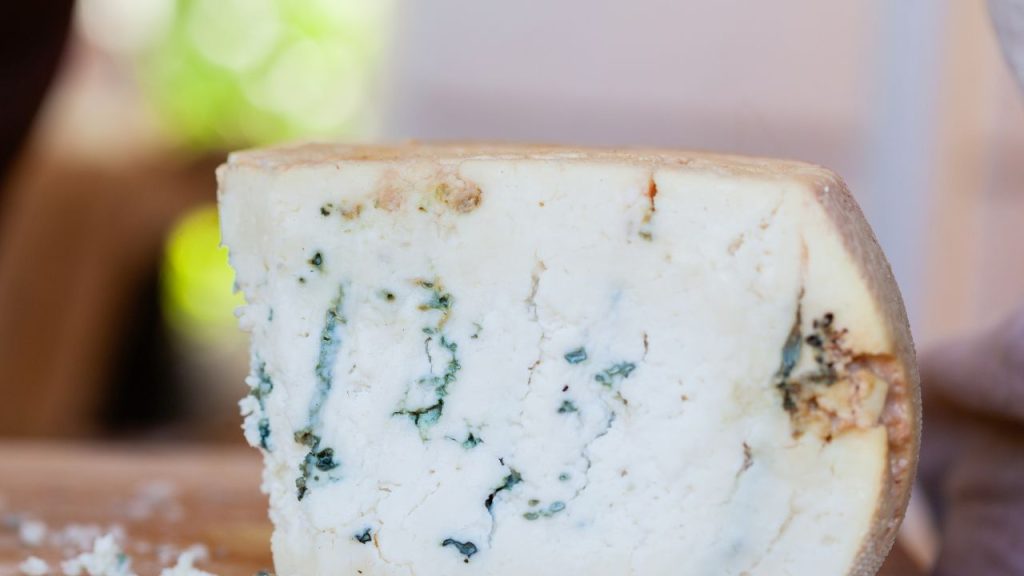
On a cheese board, Masgonzola earns its place alongside firm aged cheeses and fresh varieties. Pair it with honeycomb, dried figs, candied walnuts, sliced pears, and good crusty bread. It spreads beautifully and looks striking — the marbled blue veining against the cream-white background is visually stunning and immediately draws attention.
Bruschetta and Crostini
Spread Masgonzola generously on grilled bread, top with a drizzle of acacia honey and a few crushed pistachios, and you have one of the most effortless, impressive appetizers imaginable. The contrast between the warm, crisp bread, the cool creamy cheese, and the floral sweetness of the honey is extraordinary.
Pizza and Flatbreads
Use Masgonzola in place of standard mozzarella on a white pizza — add caramelized onions, roasted grapes, and fresh rosemary, and you have something genuinely special. The cheese melts into rich, flavorful pools that pair beautifully with sweet and herbal toppings.
Pairing Masgonzola: Wine, Fruit, and Beyond
Great cheese deserves great company, and Masgonzola is no exception.
Wine pairings: The creaminess and mild blue character of Masgonzola work beautifully with wines that offer a touch of sweetness or bright acidity. Moscato d’Asti is a classic Italian pairing — its gentle bubbles and honeyed stone-fruit notes complement the cheese’s savory tang. A chilled Pinot Grigio or Vermentino also works well, cutting through the richness cleanly. For red wine lovers, a lighter Barbera d’Asti with its natural acidity is a thoughtful match. Avoid very tannic reds, which can clash with the blue cheese elements.
Fruit pairings: Masgonzola loves sweetness. Fresh figs, ripe pears, seedless grapes, sliced peaches, and dried apricots are all excellent companions. The fruit’s natural sugars echo the Dolce component of the Gorgonzola and soften any residual sharpness.
Nut pairings: Walnuts, hazelnuts, and pecans all bring out the nutty undertones in the cheese. Candied or honey-roasted nuts add an extra layer of indulgence.
Honey: A drizzle of good honey — particularly chestnut honey or wildflower honey — is one of the simplest and most effective pairings for Masgonzola. It’s a combination as old as Italian cheesemaking itself.
Masgonzola vs. Other Blue Cheeses: How Does It Compare?
The world of blue cheese is wide and varied. How does Masgonzola fit into the broader landscape?
- vs. Gorgonzola Dolce: Masgonzola is creamier, milder, and more spreadable. Gorgonzola Dolce is still a classic and stands on its own, but Masgonzola is more accessible for those who find even Dolce slightly too assertive.
- vs. Gorgonzola Piccante: There’s a significant difference in intensity. Piccante is sharp, crumbly, and robust — Masgonzola is smooth, gentle, and lush.
- vs. Roquefort: French Roquefort, made from sheep’s milk, is far more pungent and salty. Masgonzola is a gentler, milkier alternative.
- vs. Stilton: English Stilton has a firm texture and a complex, deeply savory flavor. Masgonzola is softer and sweeter by comparison, making it the more approachable everyday choice.
- vs. Danish Blue: Danish Blue (Danablu) is sharp and salty with a crumbly texture. Masgonzola’s Italian heritage and mascarpone base make it a creamier, more refined alternative.
Storage and Care: Keeping Masgonzola at Its Best
Because Masgonzola contains mascarpone — a fresh cream cheese — it’s more perishable than aged blue cheeses and requires a little attention to stay at its best.
Wrapping: Once opened, wrap the cheese loosely in parchment or wax paper rather than plastic wrap. Plastic traps moisture and can accelerate deterioration. Parchment allows the cheese to breathe while protecting it from the refrigerator’s other odors.
Temperature: Store in the cheese drawer or the coldest part of your refrigerator, ideally between 2–5°C (35–41°F). Remove from the refrigerator about 20–30 minutes before serving to allow the flavors and texture to come alive at room temperature.
Shelf life: Consume Masgonzola within one week of opening for the best flavor and texture. Unlike harder cheeses, its high moisture content means it doesn’t age gracefully once the packaging is broken.
Why Masgonzola Matters in the World of Italian Cheese
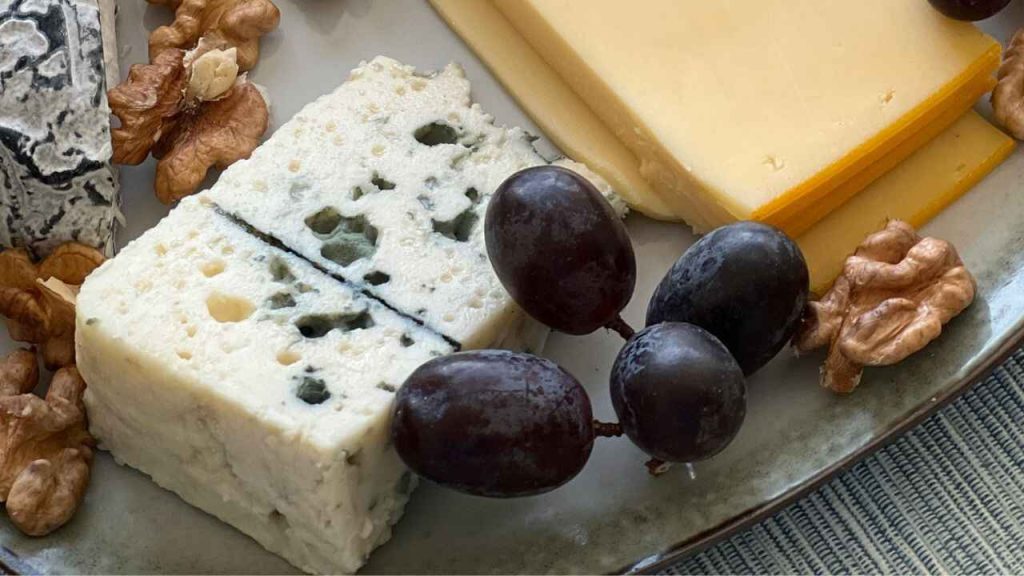
Italian cheese culture is one of the richest in the world. From the nutty depth of Parmigiano-Reggiano to the bright freshness of mozzarella di bufala, Italy has always produced cheeses of extraordinary range and character. Gorgonzola — and now Masgonzola — represent the bold, creative end of that tradition.
What Masgonzola does, cleverly and successfully, is democratize Italian blue cheese. It takes a product category that many people find intimidating and reworks it into something welcoming — without dumbing it down or stripping away what makes blue cheese special. The veining is still there. The umami complexity is still present. The connection to Gorgonzola’s long heritage is intact. But the barriers to entry are lower, the flavor is more forgiving, and the culinary applications are broader.
For the cheese industry, Masgonzola is a reminder that tradition and innovation are not opposites. They can coexist beautifully, and when they do, the result is something that honors the past while speaking clearly to the present.
Final Thoughts
Masgonzola is more than just a novelty fusion cheese. It’s a thoughtfully crafted product born from one of Italy’s most storied cheesemaking traditions, refined with technique and intention, and designed to be enjoyed by as many people as possible. Whether you spread it on bread at a Sunday brunch, fold it into a weeknight pasta sauce, or present it on a carefully curated cheese board for guests, it delivers every time.
If you’ve been curious about Italian blue cheese but hesitant to commit, Masgonzola is your ideal starting point. And if you’re already a blue cheese devotee, it offers something genuinely different — a softer, creamier, more contemplative expression of a category you thought you already knew.
Italy has been making extraordinary cheese for centuries. Masgonzola is its latest remarkable chapter.
Frequently Asked Questions
What is Masgonzola made from? Masgonzola is made by blending mascarpone — a rich Italian cream cheese — with Gorgonzola Dolce, a soft Italian blue cheese. The result is a creamy, mildly flavored fusion cheese with visible blue veining.
Is Masgonzola the same as Gorgonzola? No. While Masgonzola contains Gorgonzola Dolce as a key component, it is a distinct product. The addition of mascarpone gives it a creamier texture and a milder, more balanced flavor profile than Gorgonzola alone.
Can I use Masgonzola in cooking? Absolutely. Masgonzola melts smoothly and works beautifully in pasta sauces, risottos, polenta, pizza, and as a spread.
What wines pair best with Masgonzola? Moscato d’Asti, Pinot Grigio, Vermentino, and light-bodied reds like Barbera d’Asti pair well with Masgonzola. Wines with a touch of sweetness or bright acidity complement its creamy, tangy profile most effectively.
How long does Masgonzola keep once opened? when you open, use within one week.
Is Masgonzola good for people who don’t like strong blue cheese? Yes — it’s an excellent choice. The mascarpone significantly mellows the sharpness of the Gorgonzola, making Masgonzola one of the most approachable blue cheeses available for those who find traditional blue cheese too pungent.